<p style="text-align: justify">Success doesn’t come without some concerns. If your website has reached a new level of popularity, your servers will have to be able to handle the traffic load without crashing or causing a massive slowdown for users. You may also be finding that access to your database network is proving to be problematic. When website or database performance starts to waver, some load balancing is going to be called for and in a hurry.</p>
<p style="text-align: justify">Devising a load-balancing strategy will mean that your site is up and running without any issues and that the work your servers do is divided among them to decrease processing time. The goal is essentially to optimize resources, maximize throughput, minimize response time and prevent any overloads. The reliability of your website or database can be reinforced by using redundant servers.</p>
<h3 style="text-align: justify"><strong>How to Get Started with Balancing your Traffic</strong></h3>
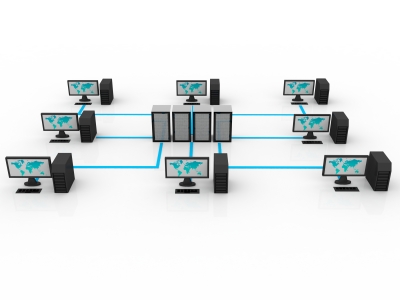
<p style="text-align: justify">Load balancing is implemented with hardware, software or a combination of both. It’s often done through computer clustering, which entails setting up a series of computers that function as a single system and prevent any one server from reaching its capacity. When two servers are used to balance a work load, a third can be used to determine which server the load should be allocated to. Also, physical distance isn’t a concern; sometimes servers are distributed to different geographic locations.</p>
<p style="text-align: justify"><img class="aligncenter size-full wp-image-10354" alt="When Do You Need Load Balancing?" src="https://medusamagazine.com/wp-content/uploads/2013/12/ID-10022940.jpg" width="400" height="300" /></p>
<h3 style="text-align: justify"><strong>Determining how much Load Balancing your Company needs</strong></h3>
<p style="text-align: justify">Now that you’ve realized that a load balancing strategy is needed, the next issue is determining how extensive your plan should be. A good way to start is by instituting some load balancing software, which can keep track of the Web servers within an infrastructure, including their location. Traffic on a per-server basis can then be monitored and DNS balancers can be checked for TTL record caching. Once Web traffic hits the load balancer, it’s distributed to other servers based on predetermined settings. Web servers that are failing are put in failover mode and removed from the load balancing pool.</p>
<p style="text-align: justify">Also, when a business needs to improve site performance, load balancing has features that enhance access and flexibility. It’s also possibly to use customized, cloud-based load balancing so that a service provider handles the effort of monitoring your traffic.</p>
<h3 style="text-align: justify"><strong>Load Balancing on Database Servers</strong></h3>
<p style="text-align: justify">The same concept used for Web traffic can be used for database servers to prevent bottlenecks or slowdowns. Databases can be clustered just as servers can, with each database containing the entire data for ready access. With this approach, high-availability clusters are required, but there’s no need for heavy data or software architecture requirements. When using multiple clusters, it may be necessary to have a near-real-time replication system or the failover won’t work. Replication must be set up so that the active system feeds back to the inactive system and is two-way.</p>
<p style="text-align: justify">By utilizing DNS, database server, network and software solutions, load balancing can become part of a comprehensive solution, affording an enterprise quick and reliable access to applications and data.</p>

When Do You Need Load Balancing?