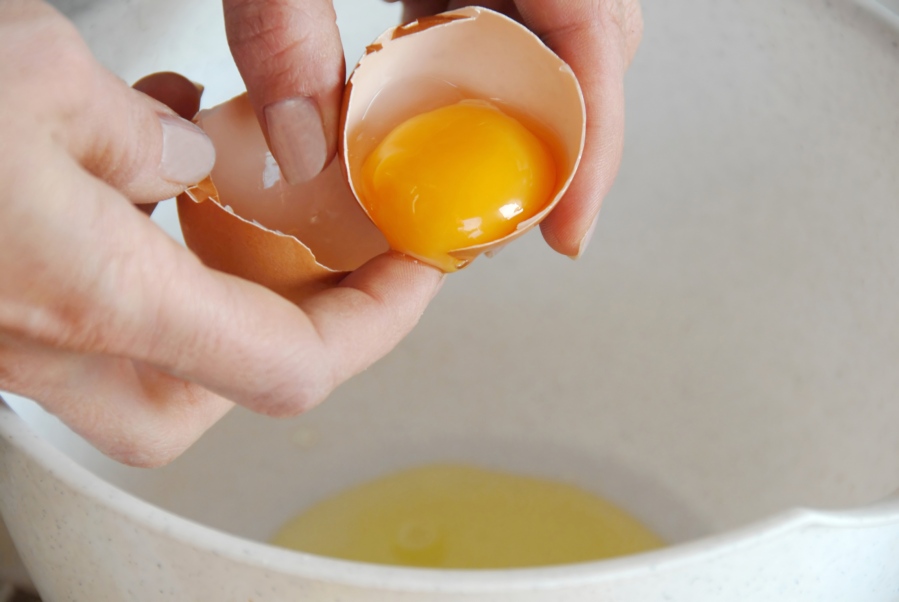
<p style="text-align: justify;">When your eggs are fresh, are clean and have no cracks, then it is unlikely that they harbour Salmonella bacteria. According to estimation, for every 20,000 eggs, one may contain enough Salmonella bacteria to cause the sickness. Although your chance of getting sickness caused by Salmonella is quite slim, you need to take enough precaution. Eggs should be handled correctly and when stored, they need to be rotated regularly to ensure that they are always fresh. Salmonella bacteria always have the chance to penetrate the egg shells. They may grow slowly at first, because the egg white contains little nutrients. However, the yolk membrane weakens and the white becomes thinner, as eggs age. So, the Salmonella bacteria will have a bigger chance in getting inside the nutrient-rich yolk.</p>
<p style="text-align: justify;">The problem may become more serious when eggs are stored in warm temperature. Salmonella can be found in other food sources as well, including cheese, pork and chicken. Contaminated orange juice, alfalfa sprouts, tomatoes and other produce could also cause the same problem. Human activity has a big role in causing the spread of Salmonella. It is important for you to understand about the common symptoms of Salmonellosis. Between 6 to 72 hours after consuming contaminated eggs, patients may suffer numerous symptoms, such as headache, fever, chills, vomiting, nausea, diarrhea and abdominal cramps. On healthy adults with good immune systems, the condition may last for only about two days.</p>
<p style="text-align: justify;">However, the condition can be serious for elderly people, pregnant women and young children. When you have Salmonellosis, bacteria can be spread through feces for about a few weeks after the apparent full recovery. However, in some cases the problem can happen for about one year. In general, Salmonellosis is rarely fatal, except for people who are very weak and have poor immune system. A number of homeopathic remedies should allow us to fight the disease more easily. You should also know that home-grown eggs are better not washed, because the washing process often removes the antibacterial layer on the shell. Before sold, eggs can be washed in a special machine. However, after doing this, these eggs should be dipped in a special oil solution to restore the layer.</p>
<p style="text-align: justify;">Other than Salmonellosis, allergies could also be a problem among children who eat eggs regularly. This is more common on infants and toddlers. Food allergies are typically unusual response to the immune system of our body to specific ingredient or food. Alleviating this problem should be quite simple, that is by removing eggs from our diet. After symptoms are gone completely, we could re-introduce eggs into our diet at low amount to avoid causing symptoms to re-appear. In order to avoid Salmonellosis, you should get eggs from trusted sources. Organically raised chicken is also healthier, because chicken are not injected with growth hormone and antibiotic. When choosing eggs, you should make sure that you have excellent nutritional value and they can also taste really better, so you will be healthier.</p>

Risks Of Salmonella On Eggs