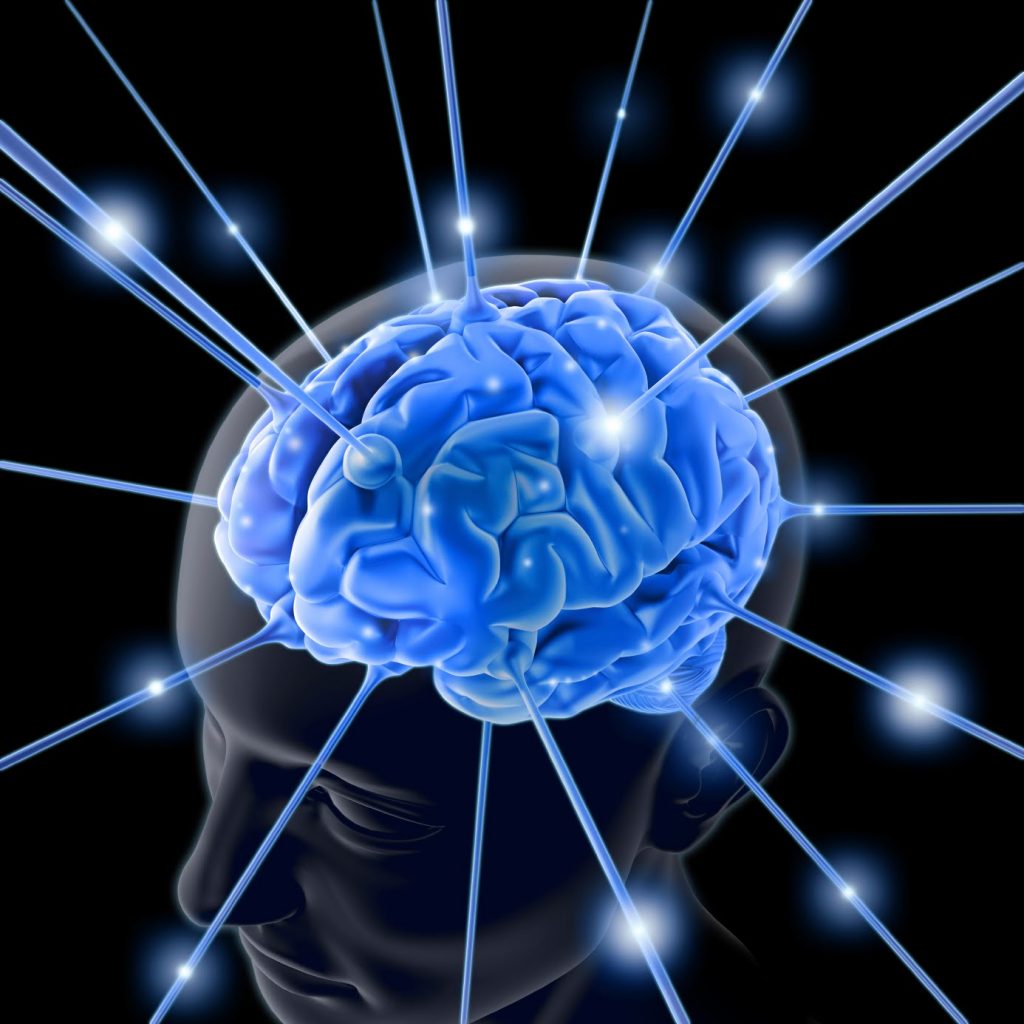
<p style="text-align: justify;">The brain is the most interesting organ in the human body, without a doubt, and also one of the most complicated to understand. Little facts that make great things in our body and we do not know for sure how science works.</p>
<p style="text-align: justify;">The human brain is very complex and each part performs a specific job which, added to the rest, make us work and behave a certain way. Today, we talk about a very special area. This is known as the brain&#8217;s reward system, a set of structures, by stimuli, makes us feel good after doing some activity or modify behavior through positive reinforcement.</p>
<h2 style="text-align: justify;"><b>Pleasure and Reward</b></h2>
<p style="text-align: justify;">The brain&#8217;s reward system is activated against an external <em>stimulus</em> and sends signals through neural connections, that neurotransmitters responsible for pleasurable feelings such as dopamine and oxytocin are released.</p>
<p style="text-align: justify;">His goal is clear: do we want to repeat one or more behaviors as a way of ensuring that. For example, in the pleasure felt when having sex or eating something delicious, makes us want to repeat the action, ensuring the survival of the species through reproduction and/or food consumption.</p>
<p style="text-align: justify;">But this system is not only active at basic behaviors for the species, but also to develop other actions that make us feel good and benefit the rest.</p>
<p style="text-align: justify;">Also, the brain&#8217;s reward system is also able to release dopamine actions are not beneficial, as risky attitudes and painful experiences, which may well become pleasure (remember that pain can be pleasurable?).</p>
<p style="text-align: justify;"><img class="aligncenter size-Correct-Size wp-image-10216" alt="How Does The Teenage Brain System Work" src="https://medusamagazine.com/wp-content/uploads/2014/01/How-Does-The-Teenage-Brain-System-Work-640x639.jpg" width="640" height="639" /></p>
<h2 style="text-align: justify;"><b>How is it Formed?</b></h2>
<p style="text-align: justify;">Unlike other activities, such as speech or logical thinking, the reward system is not centralized in just one area of ??the brain, but that is mainly composed of five areas with a clear function:</p>
<ul style="text-align: justify;">
<li><b>Amygdala</b> regulates emotions</li>
<li><b>Nucleus Accumbens:</b> controls the release of dopamine</li>
<li><b>Ventral tegmental area of Tsai:</b> liibera dopamine</li>
<li><b>Cerebellum:</b> controls muscle functions</li>
<li><b>Pituitary Gland:</b> beta releases endorphins and oxytocin, responsible for pain relief, emotions like love and positive relationships, among other things.</li>
</ul>
<p style="text-align: justify;">All these areas of the brain work like a well oiled circuit that captures the action and creates the sensation of pleasure, all through a fast process that takes part in these different brain structures.</p>
<p style="text-align: justify;">The reward system not only responds with pleasure or comfort to an action or attitude, but is also responsible for learning and then repeat that behavior, associating it with the pleasant sensation.</p>
<h2 style="text-align: justify;"><b>Learning Languages ??is Good for the Brain</b></h2>
<p style="text-align: justify;">Speaking more than one language helps us understand when we travel, get better jobs and access to new knowledge, but also has an effect on our brain. Learning new languages ??is a great way to exercise our brains and even prevent degenerative diseases like dementia and Alzheimer&#8217;s. Language learning is no longer just for the privileged few, but it is something we do from childhood, being exposed to other languages ??naturally, thanks to advances in communications. Being bilingual not only help people in academically or knowledge. Bilinguals have a better ability to separate when the ambient noise of what is important, capturing information regardless auditory distractions around.</p>
<p style="text-align: justify;">Children who learn languages ??at an early age have a greater cognitive development than those who do not, being able to respond more quickly to stimuli and resolve problems faster mental processing, analyzing and comparing information. At an early age , the brain is in full swing. All involved people of the same age and with the same level of symptoms. Interestingly, despite being atrophied brains of bilingual people just responded better on cognitive tests than those who spoke only one language and showed less brain degeneration. While at younger older age are the benefits, it is never too late to start learning languages, those activities that may exercise the brain are beneficial when it comes to maintaining an active and alert mind, putting to work the different areas mind. Of course, the benefits of speaking several languages ??are also extend to health, well beyond the formative years, protecting certain neurological conditions. You know, if you do not speak a second language, you consider learning as an investment not only in your studies or career, but also to your long term health. Your brain will thank you.</p>
<p style="text-align: justify;"><img class="aligncenter size-full wp-image-10217" alt="How Does The Teenage Brain System Work" src="https://medusamagazine.com/wp-content/uploads/2014/01/How-Does-The-Teenage-Brain-System-Work1.jpg" width="620" height="388" /></p>
<p style="text-align: justify;"><strong>Undoubtedly, the human brain works in a complex way, don’t you think?</strong></p>
<p style="text-align: justify;">Smart people do not usually follow the normal parameters of society, which &#8220;must be done&#8221;. For this reason, there is usually a high percentage of insomnia among geniuses. This may be due to an overactive mind often have to sleep it costs more or that the hours are quieter night for personal activities.</p>
<p style="text-align: justify;">You know, if you do not speak a second language, you consider learning as an investment not only in your studies or career, but also to your long term health. Your brain will thank you.</p>
<p style="text-align: justify;">How does our brain work? Our brain is a very complex living machine that can understand concepts such as the beginning of time or the infinity of the universe, yet is unable to understand himself.</p>
<p style="text-align: justify;">The functioning of our brain remains one of the great mysteries of science and far revealed, doubts and questions multiply the higher is the advancement of medical science .</p>
<p style="text-align: justify;">There is no person in this world who can explain with certainty how our brain works , which is quite obvious, because if we know the mechanism of brain function would achieve fully understand all of your skills and limits for thought , emotions , reasoning , love and all aspects of human life .</p>
<p style="text-align: justify;">We know there are billions of neurons in the human brain , and that each of them is connected by electrical impulses to other neurons thousand . Different areas of the brain that are responsible for different tasks and there is much information about how the brain that has been proven scientifically known.</p>
<p style="text-align: justify;">But understanding the mechanics of neural networks , and how this relates to the overall functioning of the brain is something that is very far yet. There is a method to study how groups of neurons form functional networks to all areas of human life .</p>
<p style="text-align: justify;">One of the biggest obstacles for scientists to investigate how the brain works is the concept of consciousness are . Somewhere in our brains we are aware of our thoughts. Are even aware of our expertise : we know we know.</p>
<p style="text-align: justify;">This is a very difficult obstacle to overcome in terms of the investigation of the human mind , and experts believe that if you ever resolved, a question equally or even more disconcerting arise.</p>
<p style="text-align: justify;">Many parents cannot understand why their teenagers behave occasionally impulsive , irrational or dangerous manner . Sometimes it seems that they do not think things through or do not consider the consequences of their actions. Adolescents are different from adults in the way they behave , solve problems and make decisions. There is a biological explanation for this difference . Studies have shown that the brain continues to mature and develop throughout childhood , adolescence and into early adulthood.</p>
<p style="text-align: justify;">The brain is the organ most changes throughout our life, and as it develops, how we think, act and relate evolves, perhaps being the teenager that is most obvious step. Moody, rebellious, unafraid to take risks, adolescents are headaches in adults, with a body and brain that is still maturing. Today, we speak of the particularities of the adolescent brain.</p>
<p style="text-align: justify;"><img class="aligncenter size-full wp-image-10219" alt="How Does The Teenage Brain System Work" src="https://medusamagazine.com/wp-content/uploads/2014/01/How-Does-The-Teenage-Brain-System-Work2.jpg" width="600" height="400" /></p>
<h2 style="text-align: justify;"><b>Brain Development in Adolescence</b></h2>
<p style="text-align: justify;">During childhood, the brain growth is more balanced, but there is a point where gray matter besides winning at full speed connections begin to develop. From age 10 in girls and 11 years in children, the connections in the human brain begins a process in which discarded unused and those that remain become efficient and integrated.</p>
<p style="text-align: justify;">Through myelination, these new synaptic connections become more efficient in receiving and transmitting information between different brain areas. Thus, adolescents are becoming able to perform actions more mature and begin to control impulses, develop skills and show consistency in their actions.</p>
<p style="text-align: justify;">Another important change is the brain of neural connections between the amygdala and the prefrontal cortex, which become denser. The amygdala is responsible for processing feelings like desire, fear, anxiety and aggression, while the pre-frontal cortex is linked with the personality and actions by regulatory judgment and self-control. Improving the connection between the two areas leads to the so-called emotional maturity.</p>
<h2 style="text-align: justify;"><b>Changes in the Brain during Adolescence and Risk</b></h2>
<p style="text-align: justify;">While several maturation processes occur in the brain during adolescence, these are timed and there goes the somewhat erratic behavior that characterizes adolescents. If we add the increase of dopamine in the brain and hormones such as testosterone, have a dangerous cocktail. Dopamine is a neurotransmitter associated with obtaining needs, pleasures and desires.</p>
<p style="text-align: justify;">In a brain that is not fully developed, excess dopamine can lead to performing risky activities and risky behavior, and looking for ways to earn rewards to feel satisfied, without a good impulse control.</p>
<p style="text-align: justify;">The teenager is likely to make decisions when emotions are present and very fast to reach pre-frontal cortex, not enough for the impulse control to stop the search for immediate satisfaction.</p>
<p style="text-align: justify;">Over the years, adolescents become more &#8220;logical&#8221; as the development of different brain circuits are equal, as they try to survive for several years with the danger of a brain &#8220;under construction&#8221;.</p>
<p style="text-align: justify;">These peculiarities about how the brain works in adolescence partly explains why teenagers do not usually accept other points of view, do not you think?</p>
<h2 style="text-align: justify;"><b>Why Teenagers don&#8217;t understand other Points of View?</b></h2>
<p style="text-align: justify;">In cognitive psychology, one of the most interesting trends in theory is the Theory of Mind , which attempts to analyze the capacity of human beings to attribute thoughts and intentions to others. Based on the assumptions of this theory , scientists at the University of London have yielded clues about a recurring familiar problem: communication difficulties among adolescents and adults .</p>
<p style="text-align: justify;"><img class="aligncenter size-full wp-image-10218" alt="How Does The Teenage Brain System Work" src="https://medusamagazine.com/wp-content/uploads/2014/01/How-Does-The-Teenage-Brain-System-Work3.jpg" width="615" height="342" /></p>
<p style="text-align: justify;">According to researchers , teenagers do not have fully developed prefrontal cortex , a region involved in the explanations of the theory of mind , which could adversely affect the communication between parents and teens. However, the frontal cortex , the area of the brain that controls reasoning and helps us to think before acting , develops later . This part of the brain is changing and maturing well into adulthood. Other specific changes in the brain during adolescence include a rapid increase in the connections between brain cells and pruning (refinement) of brain pathways. Nerve cells develop myelin, a layer insulators helps cells communicate. All these changes are essential for the coordinated development of thought, action and behavior.</p>
<p style="text-align: justify;">Experimenting with women between 7 and 27 years, the researchers used a computer program that played with the visual perspective in terms of a number of objects at the participants about which object to move a person to see it from a different perspective.</p>
<p style="text-align: justify;">The under ten years had a 75 % success rate , while those between 10 and 13 did somewhat better. Adolescents , however , fell only hitting 65 % of opportunities .</p>
<p style="text-align: justify;">Simply teenagers can not adopt or understand different points of view to yours because your brain has not fully developed that ability. This also explains certain behaviors typical selfish teenager , which are conditioned to have difficulty observing events from other viewpoints .</p>
<h2 style="text-align: justify;"><b>Brain Changes want to say that the act Differently Teenagers to Adults</b></h2>
<p style="text-align: justify;">Pictures of the brain in action show that adolescent brains work differently from adults when they make decisions and solve problems way. Your actions are guided more by the amygdala and less by the frontal cortex. Research has also shown that exposure to drugs and alcohol before birth, head trauma or other types of brain damage can interfere with normal brain development during adolescence.</p>
<p style="text-align: justify;"><strong>Based on the state of brain development, teens tend to:</strong></p>
<ul style="text-align: justify;">
<li>acting impulsively</li>
<li>Misread or misinterpret social cues and emotional</li>
<li>Engage in all kinds of accidents</li>
<li>Engaging in fights</li>
</ul>
<p style="text-align: justify;"><strong>Engaging in dangerous and risky behavior.</strong></p>
<ul style="text-align: justify;">
<li>Teens tend not:</li>
<li>Think before you act</li>
<li>Pause to consider the potential consequences of their actions</li>
<li>Change your dangerous or inappropriate behavior.</li>
</ul>
<p style="text-align: justify;">These differences in the brain do not mean that young people cannot make good decisions or tell the difference between right and wrong. This also does not mean that they should not be responsible for their actions. But, being aware of these differences can help parents, teachers, lawyers and establishing policy, understand, anticipate and manage the behavior of adolescents.</p>

How Does The Teenage Brain System Work