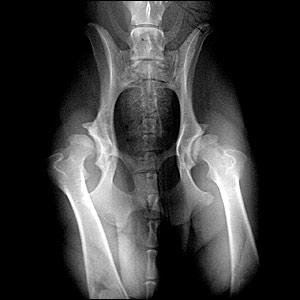
<p style="text-align: justify;">Hip dysplasia is typically the first worry of bone complications in growing puppies but you can find two other bone conditions your pup may suffer from. They are called Osteochondritis (OCD) in addition to Patellar Luxation.</p>
<p style="text-align: justify;"><b>What are this signs of problems?</b> Usually, people notice that their dogs are generally doing less or even having more problem with common activities. The dog now has problems waking up on the settee, or going in the stairs, or getting in the rear of the SUV. With more athletic dogs, maybe they can’t run as long with their seller, or they don’t need to play as long with the dog park.</p>
<p style="text-align: justify;">By there it on to overt lameness &#8212; having the limb upward, or holding this limb funny. Those are the most prevalent things we see. Rarely do we see overt pain since the first complaint. Commonly it’s a slower process.</p>
<h2 style="text-align: justify;"><b>Osteochondritis (OCD)</b></h2>
<p style="text-align: justify;">That is a common pet shared problem in developing puppies of greater breeds, especially those at risk from arthritis and constantly <b>chewing on puppy toys</b> due to growing teeth, typically affects identical breeds that are susceptible to hip dysplasia. OCD is primarily a disease of growing cartilage. It develops due to reduced blood supply into a localized area regarding cartilage. The cartilage fails to mineralize (become bone) and also the piece of cartilage that separates through the surrounding bone, creating pain and lameness.</p>
<p style="text-align: justify;">While any joint might be affected with OCD, those normally involved include the particular shoulder, elbow, leg, and ankle. Joint supplements, herbs and homeopathics will help control pain and nourish the standard cartilage and shared structures, but ultimately surgery is usually remove the malformed and detached piece of cartilage from the particular affected joints.</p>
<p style="text-align: justify;"><img class="aligncenter size-full wp-image-2798" alt=" Health Of Young Puppies and Their Hip Bones" src="https://medusamagazine.com/wp-content/uploads/2015/01/dog_hip_scan1.jpg" width="300" height="300" /></p>
<h2 style="text-align: justify;"><b>Patellar Luxation</b></h2>
<p style="text-align: justify;">So far we&#8217;ve talked about bone and shared problems in young dogs of larger breeds, but a particular problem that normally affects smaller breeds can be congenital (present on birth) patellar luxation. Breeds that typically have problems with this malady contain poodles, Pomeranians, Maltese, Yorkshire terriers, in addition to chihuahuas.</p>
<p style="text-align: justify;">The patella will be the technical term for your kneecap. In patellar luxation, the patella dislocates (luxates) when the dog’s knee shared is flexed in addition to extended. As the particular joint moves, the patella usually pops back into place, never bothering your new puppy or causing lameness.</p>
<p style="text-align: justify;">The good thing about patellar luxation is who&#8217;s rarely ever causes your new puppy a problem, and so treatment isn&#8217;t generally needed. Often, people who have these dogs will not even know you will find there&#8217;s problem. A good vet should diagnose patella luxation throughout annual physical checkups and point it out for the client (who might be unaware of the challenge to begin with).</p>
<p style="text-align: justify;">Sometimes treatment will be expected. The current recommendation would be to surgically stabilize dog’s patella via one of several surgical techniques. Surgery is only needed for those dogs where the patella does not slide back in place and leads to persistent lameness.</p>
<p style="text-align: justify;">Following surgery, a great joint supplement comprising glucosamine, chondroitin, hyaluronic acid, or perna mussels is significant to minimize the prospect of the canine developing arthritis sometime soon.</p>
<p style="text-align: justify;">Just like young children, puppies can practical knowledge growing pains while they get bigger. In young dogs, even so, the problem can occasionally be more serious over a few pains and aches. Being aware regarding potential bone in addition to joint issues, getting the puppy screened intended for these conditions, and taking steps to aid minimize them is your best defense.</p>
<p style="text-align: justify;">Another question to round it up.</p>
<p style="text-align: justify;"><b>Are some breeds more prone to joint injuries?</b> Some sort of: In general, increased size and weight is always a predisposer of joint problems. So the poster youngsters for both developmental and degenerative problems might be the bigger pet dogs.</p>
<p style="text-align: justify;">But for a number of things, there are very breed-specific problems. Newfoundlands contain the highest prevalence of cruciate ligament disease off breeds. Rottweilers convey more knee and leg problems. Bernese Mountain dogs commonly acquire elbow dysplasia.</p>

Health Of Young Puppies and Their Hip Bones