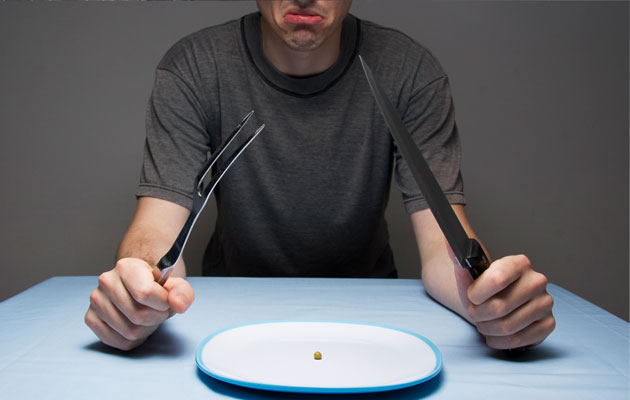
<p style="text-align: justify;">The term &#8220;eating disorder&#8221; often brings to mind the image of a young, suffering woman. Eating disorders are a serious problem among women, but according to the National Eating Disorders Association, <span style="text-decoration: underline;">millions of men are also affected</span>.</p>
<h2 style="text-align: justify;"><b>Causes and Risk Factors</b></h2>
<p style="text-align: justify;">The causes of male eating disorders are varied &#8211; they include genetics, psychological and emotional problems, and societal pressure.</p>
<p style="text-align: justify;">Men whose immediate family &#8211; siblings or parents &#8211; have eating disorders are likelier to develop them as well. From a psychological standpoint, eating disorders are more prevalent among men suffering from perfectionism, low self-esteem, unhappy relationships and poor impulse control.</p>
<h2 style="text-align: justify;"><b>Anorexia Nervosa</b></h2>
<p style="text-align: justify;">Men with anorexia don&#8217;t just want to be lean &#8211; they have a distorted perception of their bodies and a life-threatening fear of gaining weight. Other characteristics of anorexia nervosa include:</p>
<p style="text-align: justify;">· Severe dieting or fasting</p>
<p style="text-align: justify;">· Rituals around eating</p>
<p style="text-align: justify;">· Compulsive exercise</p>
<p style="text-align: justify;">· Lying about eating</p>
<p style="text-align: justify;">· Frequently weighing oneself</p>
<p style="text-align: justify;">· Constantly thinking about food</p>
<p style="text-align: justify;">· Abnormal focus on certain body parts</p>
<p style="text-align: justify;">· Loathing one&#8217;s physical appearance</p>
<p style="text-align: justify;">Anorexic men often suffer from depression, isolation, loss of libido, confusion, disordered sleeping, gender-identity issues, poor self-esteem, irritability and obsessive, inflexible thinking.</p>
<p style="text-align: justify;">From a physical perspective, men with anorexia nervosa may experience a 15% or greater drop below normal bodyweight, fatigue, low stamina, weakness, poor proprioception, irregular heartbeat, low testosterone levels, hair loss, downy body hair and tingling in the extremities.</p>
<p style="text-align: justify;"><img class="aligncenter size-full wp-image-3257" alt="Eating Disorders Common Among Men" src="https://medusamagazine.com/wp-content/uploads/2015/03/Eating-Disorders-Common-Among-Men.jpg" width="630" height="400" /></p>
<h2 style="text-align: justify;"><b>Bulimia Nervosa</b></h2>
<p style="text-align: justify;">Bulimia nervosa is another potentially fatal eating disorder which can affect men. In fact, approximately 50% of people who have suffered from anorexia nervosa go on to become bulimic. Bulimia is characterized by episodes of binge-eating &#8211; the consumption of exceedingly large quantities of food in a short period of time &#8211; followed by self-induced purging (vomiting, or the use of diuretics, laxatives, food restriction or intense exercise).</p>
<p style="text-align: justify;">Men with bulimia nervosa feel a loss of control when they binge-eat. A bulimic may hide food and eat it when no one is watching, feel disgusted about their body, check their weight frequently and, like in cases of anorexia nervosa, have a distorted perception of how their body looks.</p>
<p style="text-align: justify;">Bulimics may be intensely afraid of gaining weight, suffer from depression and isolation, have gender-identity issues, feel worthless and exhibit a strong need for control &#8211; which is often met by purging.</p>
<p style="text-align: justify;">Bulimia can damage the body in a number of ways, including:</p>
<p style="text-align: justify;">· Frequent fluctuations in weight</p>
<p style="text-align: justify;">· Constipation</p>
<p style="text-align: justify;">· Damaged teeth (from the corrosive effects of vomit)</p>
<p style="text-align: justify;">· Irregular heart beat</p>
<p style="text-align: justify;">· Gastric rupture</p>
<p style="text-align: justify;">· Tears in the esophagus</p>
<p style="text-align: justify;">· Fatigue</p>
<h2 style="text-align: justify;"><b>Binge Eating</b></h2>
<p style="text-align: justify;">Binge eating &#8211; a severe eating disorder also known as BED &#8211; shares one similarity with bulimia nervosa: recurring episodes of compulsively overeating. Unlike in bulimia, binge eating does not involve purging as an attempt to prevent weight gain.</p>
<p style="text-align: justify;">Male binge eaters eat large quantities of food, abnormally quickly, even without being hungry. They may feel a lack of control when binging. Like bulimics, they may hoard food and eat it when others are not around. They often eat throughout the day, without planning meals.</p>
<p style="text-align: justify;">People who binge-eat may feel depressed, worthless, irritated, isolated, ashamed, disgusted and unable to express themselves. Binge eaters often use food to numb uncomfortable feelings.</p>
<p style="text-align: justify;">Men that binge eat are at risk for a number of physical issues, including cardiovascular problems, blood sugar fluctuations, fatigue and joint pain.</p>
<h2 style="text-align: justify;"><b>Muscle Dysmorphia</b></h2>
<p style="text-align: justify;">Unlike anorexia nervosa, bulimia nervosa and binge eating, muscle dysmorphia &#8211; also called &#8220;megarexia&#8221;, &#8220;reverse anorexic nervosa&#8221; or &#8220;bigorexia&#8221; &#8211; is an eating disorder which overwhelmingly affects males. It is characterized by the sufferer&#8217;s fear that they feel weak and undersized &#8211; even if the opposite is true.</p>
<p style="text-align: justify;">A man suffering from muscle dysmorphia has a powerful preoccupation with the appearance of their body size and muscles. Even small changes from what a &#8220;bigorexic&#8221; considers their aesthetic ideal can cause significant emotional distress. Some scientists consider this eating disorder to be a form of obsessive-compulsive disorder, rooted in the media-driven standard of extremely muscular, hyper-masculine men.</p>
<p style="text-align: justify;">Men with this eating disorder may suffer from:</p>
<p style="text-align: justify;">· Soft-tissue damage and joint pain (due to physical overexertion)</p>
<p style="text-align: justify;">· Anxiety</p>
<p style="text-align: justify;">· Substance abuse or addiction</p>
<p style="text-align: justify;">· Interpersonal difficulties</p>
<p style="text-align: justify;">· An increased risk of depression or suicide</p>
<h2 style="text-align: justify;"><b>Hope for Men with Eating Disorders</b></h2>
<p style="text-align: justify;">Mental and emotional disturbances are at the root of most eating disorders. As such, one of the best ways to treat sufferers is with the help of a qualified <span style="text-decoration: underline;">eating disorder therapist</span>. Therapy can safely address many underlying issues, including low self-esteem, anxiety, depression, guilt and emotional trauma.</p>

Eating Disorders Common Among Men