<p style="text-align: justify"><span style="color: #333333"><span style="font-family: Arial, sans-serif"><span style="font-size: medium">Most car owners would like to obtain the best possible fuel efficiency. One of the keys to good gas mileage is keeping your vehicle in tip-top mechanical condition. However, it is important to mention that certain maintenance items do not impact a vehicle’s fuel economy. Here is the car maintenance that does and does not increase fuel efficiency.</span></span></span></p>
<h3 style="text-align: justify"><strong>Dirty Air Filter Increases Fuel Economy &#8211; MYTH</strong></h3>
<p style="text-align: justify"><img class="aligncenter size-Correct wp-image-12837" src="https://medusamagazine.com/wp-content/uploads/2014/05/Car-Maintenance-That-Does-and-Doesnt-Increase-Fuel-Efficiency-air-filter-600x394.jpg" alt="Car Maintenance That Does and Doesn't Increase Fuel Efficiency" width="600" height="394" /></p>
<p style="text-align: justify"><span style="color: #333333"><span style="font-family: Arial, sans-serif"><span style="font-size: medium">An engine’s air filter needs to be replaced periodically. However, do expect a new air filter to improve your vehicle’s fuel efficiency. Modern vehicles are designed with a computerized engine control module that precisely regulates the amount of fuel that is used. Although a dirty air filter does not change the vehicle’s fuel efficiency, it will certainly reduce the performance of the engine.</span></span></span></p>
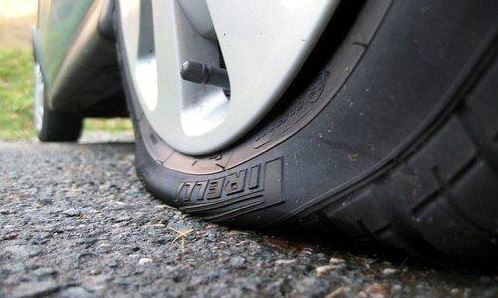
<h3 style="text-align: justify"><strong>Low Tire Pressure Negatively Impacts Fuel Economy &#8211; LEGIT</strong></h3>
<p style="text-align: justify"><img class="aligncenter size-full wp-image-12838" src="https://medusamagazine.com/wp-content/uploads/2014/05/Car-Maintenance-That-Does-and-Doesnt-Increase-Fuel-Efficiency-low-tire-pressure.jpg" alt="Car Maintenance That Does and Doesn't Increase Fuel Efficiency" width="498" height="298" /></p>
<p style="text-align: justify"><span style="color: #333333"><span style="font-family: Arial, sans-serif"><span style="font-size: medium">Your tire pressure can have a big impact on fuel consumption. If you are driving on a set of under-inflated tires, expect your overall fuel efficiency to drop. Due to the increased friction on the road, the engine may use up to 10 percent more fuel. To find the recommended tire pressure for your vehicle, refer to the owner’s manual.</span></span></span></p>
<h3 style="text-align: justify"><strong>Fuel Additives Boost MPG &#8211; MYTH</strong></h3>
<p style="text-align: justify"><img class="aligncenter size-Correct wp-image-12839" src="https://medusamagazine.com/wp-content/uploads/2014/05/Car-Maintenance-That-Does-and-Doesnt-Increase-Fuel-Efficiency-fuel-cleaner-600x457.jpg" alt="Car Maintenance That Does and Doesn't Increase Fuel Efficiency" width="600" height="457" /></p>
<p style="text-align: justify"><span style="color: #333333"><span style="font-family: Arial, sans-serif"><span style="font-size: medium">Several reputable studies have revealed that fuel additives do not improve gas mileage. High-quality fuels already contain all of the additives that are necessary to keep your engine clean. Unfortunately, catchy advertisements lead some people to believe that adding a fuel additive will save them gas. Furthermore, some of the fuel additives on the market can potentially damage the various plastic and rubber parts on a car.</span></span></span></p>
<h3 style="text-align: justify"><strong>Worn Oxygen Sensors Kills Gas Efficiency &#8211; LEGIT</strong></h3>
<p style="text-align: justify"><img class="aligncenter size-Correct wp-image-12840" src="https://medusamagazine.com/wp-content/uploads/2014/05/Car-Maintenance-That-Does-and-Doesnt-Increase-Fuel-Efficiency-oxy-sensors-587x438.jpg" alt="Car Maintenance That Does and Doesn't Increase Fuel Efficiency" width="587" height="438" /></p>
<p style="text-align: justify"><span style="color: #333333"><span style="font-family: Arial, sans-serif"><span style="font-size: medium">A bad oxygen sensor will cause your gas mileage to plummet. In some instances, it may decrease your overall gas mileage by 50 percent. The good news is that most oxygen sensors are designed to last for up to 100,000 miles. Typically, a worn out oxygen sensor will trigger the check engine light.</span></span></span></p>
<h3 style="text-align: justify"><strong>Clogged EGR Valve Chokes Your Engine &#8211; LEGIT</strong></h3>
<p><img class="aligncenter size-Correct wp-image-12841" src="https://medusamagazine.com/wp-content/uploads/2014/05/Car-Maintenance-That-Does-and-Doesnt-Increase-Fuel-Efficiency-egr-600x452.jpg" alt="Car Maintenance That Does and Doesn't Increase Fuel Efficiency" width="600" height="452" /></p>
<p style="text-align: justify"><span style="color: #333333"><span style="font-family: Arial, sans-serif"><span style="font-size: medium">A clogged EGR valve can have a detrimental impact on gas mileage. The purpose of an EGR valve is to reduce exhaust emissions. Unfortunately, carbon buildup can cause the EGR valve to remain partially open at all times. Although a new EGR valve can be purchased, cleaning it may be the most cost-effective approach.</span></span></span></p>
<p style="text-align: justify">Although maintenance is critical to the longevity and efficiency of your vehicle, not every maintenance procedure will enhance the gas mileage. Do not forget to also implement the use of efficient driving strategies. <span style="font-family: Arial, sans-serif"><span style="font-size: medium">Here&#8217;s a few tips on how to drive more efficiently:</span></span></p>
<ul style="text-align: justify">
<li><strong>Drive so that you don&#8217;t have to use the brakes.</strong> Don&#8217;t tail other vehicles too closely, let off the gas early when approaching a stop, and don&#8217;t race between stop signs in residential neighborhoods. If you brake often, your engine is driving with more net resistance, and wasting more energy.</li>
<li><strong>Follow semi trucks. </strong>Don&#8217;t tail these big vehicles, but especially when it comes to highway driving, you&#8217;ll get the most MPGs by mimicking the driving habits of a professionally trained truck driver. They brake and speed up slower, but if you&#8217;re looking to minimize fuel consumption, this is the way to go.</li>
<li><strong>Don&#8217;t travel over 80-85 mph. </strong>There is a certain speed at which your vehicle reaches a climax in fuel efficiency, but after that climax, MPGs begin to plummet. Most mainstream consumer vehicles aren&#8217;t designed to handle the friction that comes purely from the wind breaking against your car. Optimum MPGs happen between 60 and 75 mpg.</li>
</ul>
<p style="text-align: justify"><span style="color: #333333"><span style="font-family: Arial, sans-serif"><span style="font-size: medium">For the repairs you need to boost your fuel economy, check in at a reputable auto shop.</span></span></span></p>

Car Maintenance That Does and Doesn’t Increase Fuel Efficiency