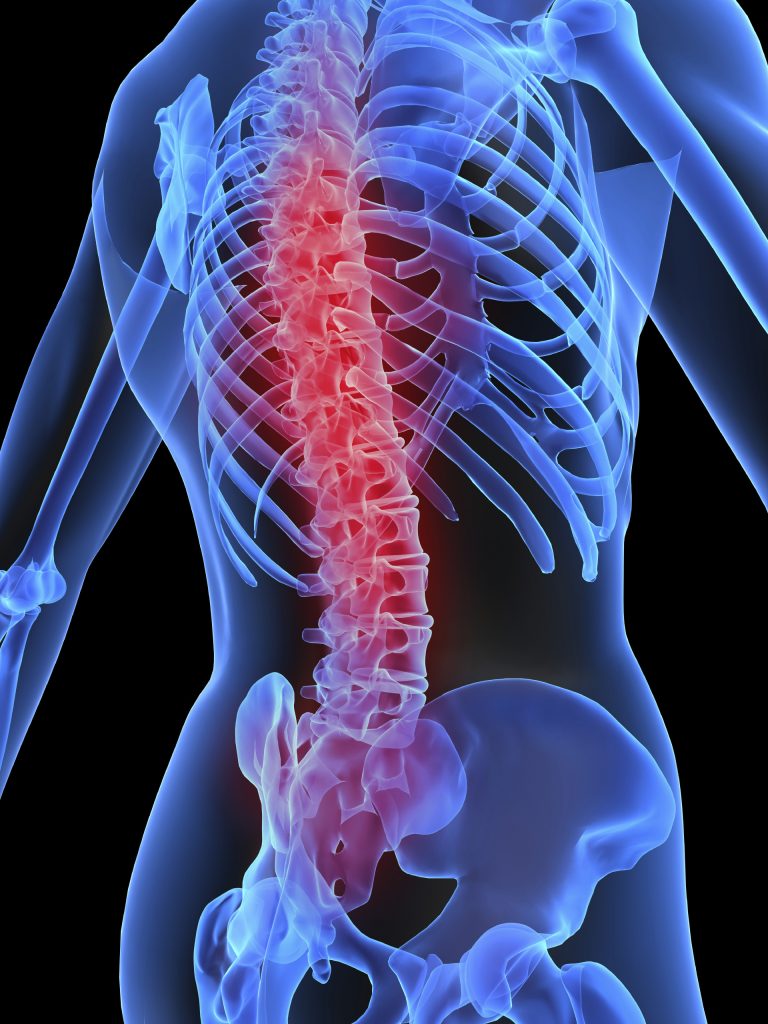
<p style="text-align: justify;">According to the Center for Disease Control and Prevention, approximately 200,000 people in the United States live with some form of spinal cord injury. Every year, 12,000 to 20,000 new cases may occur. Motor vehicle accidents, falls, acts of violence and sports related events are the leading cause of these injuries. Once considered hopeless, and often leaving patients with varying degrees of immobility, advances in medicine now provide hope and a better future for patients having suffered spinal injuries.<!--more--></p>
<p style="text-align: justify;">With continued research, scientists at the University in Basel, working with teams at the Friedrich Miescher Institute for Biomedical Research, discovered that patients suffering an incomplete spinal injury often experience partial recovery of basic motor functions. The delicate muscle fibers and nerve cells found in the area surprisingly encourage renewed connections. These findings may help researchers design innovative therapies and treatments following certain types of traumatic injuries.</p>
<p style="text-align: justify;"><img class="aligncenter size-large wp-image-2597" alt="Advances In Spinal Cord Injury Treatment" src="https://medusamagazine.com/wp-content/uploads/2014/12/Advances-In-Spinal-Cord-Injury-Treatment-768x1024.jpg" width="710" height="946" /></p>
<h2 style="text-align: justify;"><em><strong>The Mystery Behind Spinal Healing</strong></em></h2>
<p style="text-align: justify;">As long as some intact tissue connections exist, the tissues serve as a bridge and a resource for regenerating new circuitry. While scientists knew that the possibility of partial healing might occur, until recently, the mechanisms involved remained a mystery. By using laboratory mice, scientists uncovered the mechanisms involved in the physiological healing process. Within the healthy muscle tissue, hidden in the spindle fibers, lies a memory that triggers healing. Any limb movement initiates sensory feedback loops between the muscle fibers and the nerve tissue in the spinal column. The ongoing feedback creates a relay network that encourages the onset and progression of healing.</p>
<p style="text-align: justify;">Immediately after an injury, muscle communication makes it possible for nerve cells to continually provide information to the central nervous system, even if a disconnect exists between the brain and the spinal cord. The discovery proved that the information relayed between local tissues remains as important as the transmissions traveling to and from the brain. Nonetheless, the healing and recovery experienced at best only successfully produces sufficient healing to allow for basic function. Fine motor skills are permanently lost. This research also showed the importance of muscle movement in the healing process and the necessity to keep muscles moving even if only by passive means. Additionally, the greater the degree of muscle use, the greater the intensity of feedback circuitry and communication.</p>
<h2 style="text-align: justify;"><em><strong>Previous Innovative Findings</strong></em></h2>
<p style="text-align: justify;">Researchers at Quark Pharmaceuticals Inc., working with scientists from the W.M. Keck Center for Collaborative Neuroscience revealed that often times following spinal injury, healing may not immediately begin secondary to the production of a protein called RhoA. Equipped with this information, scientists formulated a molecule known as SiRNA, which interferes with the production and release of this protein.</p>
<p style="text-align: justify;">Administering the molecule requires a procedure similar to a spinal tap that delivers the chemical containing compound to the precise location. In addition to encouraging the healing process to begin, it is hoped that the minimally-invasive treatment will also help patients experience relief from the phenomena known as phantom pain, which is also caused by the protein&#8217;s presence. The discovery exhibited promising results as laboratory animals showed improvement through healing.</p>

Advances In Spinal Cord Injury Treatment