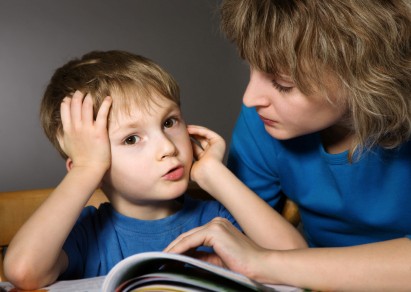
<p style="text-align: justify;">Just like adults, children are also prone to a number of emotional health problems and mood disorder. Determining when you have to take your kid to a therapist isn’t easy. Normally, children don’t have the communication and emotional capability to express what they are feeling.</p>
<p style="text-align: justify;"><img class="aligncenter wp-image-5287 size-full" src="https://medusamagazine.com/wp-content/uploads/2017/02/speech_therapy.jpg" alt="7 Signs Your Child Needs To See A Therapist" width="411" height="292" /></p>
<p style="text-align: justify;">Below are 7 signs that could indicate the need for a Toronto child therapist for your child.</p>
<p style="text-align: justify;"><strong>Your child is overly anxious.</strong></p>
<p style="text-align: justify;">From time to time, children produce generalized anxiety that makes them afraid of a particular thing. Oftentimes, they want everything to be perfect and will feel bad if they can’t live up to their standards. There are also times that they develop certain phobias. Being nervous and embarrass are common among kids; however, extreme behavior changes that may seem to be exaggerated could be considered as signs of an anxiety disorder.</p>
<p style="text-align: justify;"><strong>There are changes in normal daily activities.</strong></p>
<p style="text-align: justify;">Every child undergoes growth spurts and a stage in their life where they sleep or eat more or less for a number of days; however, if there are huge changes in his or her sleeping and eating habits that persist for over two weeks, a visit to a therapist is needed as soon as possible. It is also important to pay attention to frequent nightmares, difficulty in staying and falling asleep. Behavior changes that aren’t normal could usually mean something.</p>
<p style="text-align: justify;"><strong>Your child sleeps too much and seems uninterested in anything.</strong></p>
<p style="text-align: justify;">Children, regardless of age, can experience depression. Depression is among the leading factors that contribute to the poor performance of young kids in school. It is also linked to other problems like dropping out of school, acting out in school, eating problems, learning problems, delinquency, violence, excessive risk taking behavior and suicide. The manifestation of depression differs according to age group and in different ways. The younger the kid is, the hard it is for him/her to comprehend his/her feelings, identify and label them. The younger they are, the more difficult it is for them to verbalize how they feel.</p>
<p style="text-align: justify;"><strong>Your child is Isolating herself/himself.</strong></p>
<p style="text-align: justify;">If you notice that you kids unexpectedly withdrew from his/her friends, you must take note of this. Social isolation is considered as a sign of anxiety disorder or depression.</p>
<p style="text-align: justify;"><strong>Your child has regressed behavior.</strong></p>
<p style="text-align: justify;">Seeing a child with regressed behavior can be considered as a sign that the child requires emotional support. Clingy behavior, frequent tantrums, separation issues and bedwetting should all be taken into consideration as a sign to see a therapist.</p>
<p style="text-align: justify;"><strong>There are changes in behavior in various places.</strong></p>
<p style="text-align: justify;">If children are experiencing any mental health issue, problems are likely to happen in more than one area. You may notice changes in behavior in places such as the house, school or even with friends.</p>
<p style="text-align: justify;"><strong>Your child is talking or thinking about death a lot.</strong></p>
<p style="text-align: justify;">If you notice that your kid is verbalizing about suicidal thoughts or actions, schedule a visit with a therapist immediately. It’s important that you don’t shame your kid or redirect him/her not to say such things. Make sure to show support and unconditional love and ask help.</p>
<p style="text-align: justify;">Thanks to Thrive Therapy for their tips.</p>

7 Signs Your Child Needs To See A Therapist