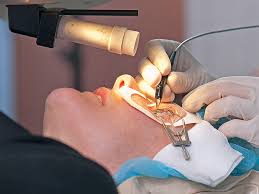
<p style="text-align: justify;">Despite the fact that <span style="text-decoration: underline;">LASIK was approved</span> by the FDA in 1998, a number of myths about this common eye procedure abound. If you are considering LASIK eye surgery to correct your vision and reduce or eliminate the need for glasses and contacts, it is important that you arm yourself with facts. Here are four common myths about LASIK surgery.</p>
<p style="text-align: justify;"><img class="aligncenter size-full wp-image-5087" alt="4 Myths About LASIK Surgery" src="https://medusamagazine.com/wp-content/uploads/2016/07/lasik.jpg" width="259" height="194" /></p>
<h2 style="text-align: justify;"><b>Myth 1: Anyone Can Get LASIK</b></h2>
<p style="text-align: justify;"><b> </b>Though the situations in which LASIK can be used have been expanded over the years by the work of <span style="text-decoration: underline;">diligent ophthalmologists</span>, the truth is that the procedure isn&#8217;t for everyone. Only a certified, licensed physician can determine if LASIK will work to correct your vision. Candidates who may be excluded include:</p>
<ul style="text-align: justify;">
<li>Those under the age of 18,</li>
<li>People with extensive eye disease (e.g. glaucoma, cataracts, etc.),</li>
<li>Individuals with severe autoimmune disorders,</li>
<li>People with large pupils,</li>
<li>Pregnant women, and</li>
<li>Individuals with an eye infection.</li>
</ul>
<p style="text-align: justify;">The ophthalmologist will make a comprehensive examination of your eye and take a detailed health history before recommending LASIK. For those who aren&#8217;t immediately able to undergo the procedure, it is often possible to treat an underlying condition or wait for its resolution before finally proceeding with LASIK.</p>
<h2 style="text-align: justify;"><b>Myth 2: Results Are Permanent</b></h2>
<p style="text-align: justify;">Though LASIK can offer long-term vision correction, the results are not permanent for one simple reason &#8211; your eye continues to age. Even with LASIK surgery, your eye and the muscles that control it will continue to age and that means changes that can affect vision. At some point, this natural process may necessitate that you wear glasses or contacts again. In some cases, a second LASIK procedure can be performed.</p>
<p style="text-align: justify;">LASIK can&#8217;t produce perfect vision in every individual, so it is unrealistic for people with severe vision abnormalities to expect to be able to ditch their corrective lens. In some cases, LASIK can improve vision and reduce a prescription requirement for an individual, but cannot completely eliminate the person&#8217;s need for corrective lens.</p>
<h2 style="text-align: justify;"><b>Myth 3: LASIK Isn&#8217;t Surgery</b></h2>
<p style="text-align: justify;">Even though LASIK is performed with a laser rather than a scalpel, it is still surgery. Tissue is cut in the process, so that qualifies LASIK as surgery. Because of the precise control of the laser and the speed with which the procedure is performed, LASIK has a very low risk profile compared to other types of eye surgery. Most patients recover within 24-48 hours and no one has ever gone blind from LASIK.</p>
<h2 style="text-align: justify;"><b>Myth 4: Any Ophthalmologist Can Perform LASIK</b></h2>
<p style="text-align: justify;">While many ophthalmologists perform the LASIK procedure, some are better trained that others. When it comes to your eye health, it doesn&#8217;t make sense to compromise by putting your vision in the hands of an undertrained or inexperienced surgeon. Don&#8217;t be afraid to <span style="text-decoration: underline;">ask the surgeon</span> how many eyes he or she has operated on, what equipment will be used, and what kind of long-term care the doctor will provide. If your doctor isn&#8217;t willing to answer all of your questions, move on.</p>
<h2 style="text-align: justify;"><b>Deciding on LASIK</b></h2>
<p style="text-align: justify;">Whether you live in St. Louis, MO or some other town or city across the country, chances are good that there is a highly qualified LASIK provider near to you. The procedure is safe and effective when performed on the right individuals by a qualified surgeon. Start the process today by booking an appointment with an ophthalmologist that performs LASIK, one who can dispel the myths about the procedure and answer all of your questions.</p>

4 Myths About LASIK Surgery