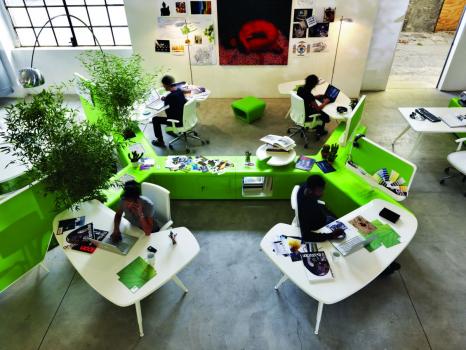
<p style="text-align: justify">Enjoying a green lifestyle is also about make overall improvements in our life. A common way is to take environmentally-friendly methods at home, but we could also do this at work. People spend much of their lives indoors, not only in the house, but also at work. This could equal to 40 hours each week inside our office room or cubicle. Whether you are marketing associates, office assistants or intern students at big companies, it is likely that we will spend much of our time inside these small spaces. In this case, it is important to make our workspace energy efficient and eco-friendly. Here are simple changes we could do:</p>
<h2 style="text-align: justify"><strong>1. Use Computer conservation</strong></h2>
<p style="text-align: justify">For many people it is absolutely important to get things done in the office. It’s estimated that people have wasted more than $1 billion only in efficient computer usages. There are things we could do conserve energy for our computer: We could enable the energy-saving settings inside our computer. It is also important to choose low-power processors, printer and monitor. In many cases, it is unnecessary to choose powerful, gaming-grade processors and graphics cards for office tasks. An obvious solution is to always turn off our computer, monitor and printer when we are not using them. Choose a keyboard with built-in sleep or hibernate keys, so we can put our computer into sleep mode when we are away for awhile.</p>
<h2 style="text-align: justify"><strong>2. Use less Paper</strong></h2>
<p style="text-align: justify">In many cases, it isn’t necessary to print out all handouts and emails in the office. We could go paperless whenever possible to reduce unnecessary waste. We can try to keep copies of manuals, documentation, files and emails on our computer. We should ask people not to send extra magazines and catalogues if no one will read them. It is also a good idea to review any digital document before printing them out. Company updates could also be sent through email and instant messages instead of paper. Instead of getting a hard copy, we could get our check deposited directly. When we purchase paper, make sure they are chlorine-free and if possible recycled. Paper made from alternative, organic sources like hemp, cotton and bamboo put less pressure to our remaining forests and jungles. Also, it is possible to print on both sides of the paper. Old paper can be used as packing material and it is a good idea to reuse old boxes. Old sheets of paper could be used for note taking and scrap paper. We shouldn’t print color, if plain black ink is adequate for printing documents and simple logos.</p>
<h2 style="text-align: justify"><strong>3. Try to Recycle</strong></h2>
<p style="text-align: justify">There are many things that we can recycle at home. We can start on our own, if there’s no recycling station at office. It is as easy as having a few properly marked bins with brief recycling guidelines. Products we can recycle include plastic bottles, soda cans, magazine, envelopes, copy paper and cardboard boxes. Ink cartridges, plastic bags and aluminium foil can also be reused.</p>

3 Ways to Make Your Work Area Greener